



In conversation with... Professor Gillian Leng
23 Nov 2026
Estimated read time:
10
min read
We sit down with Gillian as she starts her new role as President of Council at Medical Protection Society, of which Medical Protection is a part.
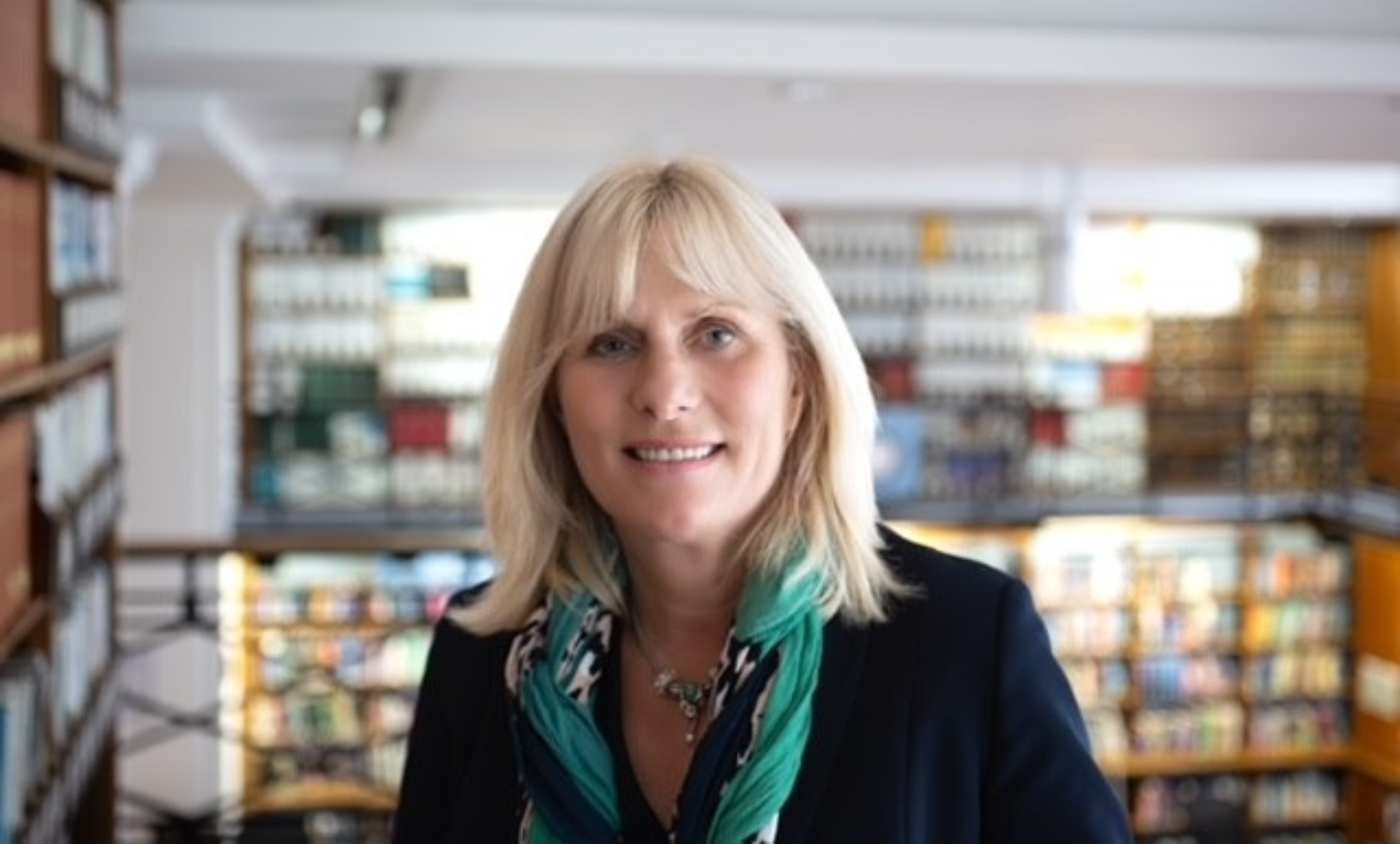
Professor Gillian Leng CBE is a leading figure in UK healthcare, with a distinguished career spanning clinical medicine, public health, research and healthcare policy. A graduate of the University of Leeds, she has maintained a strong commitment to improving healthcare through high-quality evidence and better clinical practice.
Can you tell us about your career to date?
I trained in medicine and, early in my career, became interested in the role of evidence informing clinical practice. As a junior doctor, I was struck by how much variation there could be between different consultants, each being informed by the evidence but taking a different approach to the same issue. That experience sparked my interest in research and in understanding how evidence can help improve decision-making in healthcare.
I went on to complete an MD in Edinburgh at a time when the Cochrane Collaboration was being established, which further shaped my interest in evidence-based medicine and translating research into everyday practice. I went on to spend 20 years at NICE, working across all medical specialties on issues ranging from professional training to innovation and new technologies.
One of my earliest responsibilities was establishing NICE's clinical guidelines programme, working with four medical Royal Colleges. That programme became the biggest clinical guidelines programme in the world, and has influenced healthcare across all common disease and conditions. I later became Chief Executive of NICE.
While my career began in clinical medicine, I have spent much of it working across public health and the wider healthcare system. Throughout my career, I have remained passionate about using evidence to drive change. This can mean financial investment, pathway redesign and retraining, and combination which always works best when clinicians and managers work effectively together.
My work has also given me the opportunity to engage extensively with healthcare systems around the world. Through organisations such as the Cochrane Collaboration and the Guidelines International Network, and through links with universities and healthcare organisations overseas, I have seen how different countries are grappling with many of the same challenges. While healthcare systems may be funded and organised differently, they are all trying to respond to increasing complexity, expanding treatment options and growing patient expectations.
Today, alongside serving as President of the Medical Protection Society, I am President of the Royal Society of Medicine, Vice-Chair of the Cochrane Collaboration and Chair of the Industrial Injuries Advisory Council. More recently, I led the review of physician and anaesthesia associates, which provided valuable insights into many of the challenges facing healthcare today.
What do clinicians need from their indemnity organisation today? And do you think this has changed over time?
What clinicians need has changed because medicine itself has changed significantly.
We are working in an era of artificial intelligence, using an ever-expanding range of drugs and technologies, new ways of delivering care through virtual consultations and digital healthcare, and increasingly complex multidisciplinary teams. We are doing more, in more settings, and alongside more healthcare professions than ever before.
If you think about healthcare through the lens of what we do, where we do it, who does it and how we do it, almost every aspect has evolved. Care is no longer delivered solely in traditional clinical settings. We now provide care online, at home and through virtual consultations. The range of healthcare professionals involved in patient care has expanded significantly, and the NHS has more healthcare roles than any other healthcare system in the world. The ways in which care is delivered have also become increasingly complex.
As a result, members need support to navigate that complexity. They need up-to-date training and guidance on their professional responsibilities and on how to practise safely in a rapidly changing environment. They also need support in working effectively with colleagues across multidisciplinary teams. There can still be uncertainty about roles and responsibilities, and if we want a safe healthcare system, there needs to be clarity about who is responsible for what and where professional boundaries lie.
Another major change is how information is communicated. We've moved from paper-based communication to email, social media and a wide range of digital channels. Patients and professionals are increasingly influenced by online information, including healthcare influencers. That creates both opportunities and risks, particularly when advice is being shared publicly.
It also raises an important question about the role organisations such as MPS should play. Ensuring members receive the right information, through the right channels, is far more challenging than it once was because there are now so many different ways people consume information. That's an important part of helping members practise safely in today's healthcare environment.
Throughout your career, you’ve championed evidence-based decision making. Is it becoming harder to have evidence-led discussions in an age of social media and stronger public debate?
I would argue that in the age of so much information, it makes it even more important to ground all decisions in the best available evidence.
Research evidence is rarely completely black and white – it is invariably shades of grey. That is why independent expert committees, such as those used by NICE, are so valuable. They examine the evidence in detail and consider other important factors alongside it, including patient choice and how recommendations can be implemented in practice.
For individual clinicians, keeping up with the volume of new evidence is increasingly difficult. Therefore, it remains essential that clinicians are helped to engage with the evidence base through organisations such as NICE and Cochrane to understand the research underpinning their decisions.
At the same time, patients are increasingly using AI tools and online resources to seek answers about their health before consulting a healthcare professional. That makes it even more important for clinicians to be grounded in robust sources of evidence and to be able to bring that evidence into discussions with patients.
How do you see AI changing the way doctors practise, and how should we prepare the next generation?
It is difficult to give a definitive answer because AI is evolving so rapidly. People working in the field often say that the ability of an AI tool can change overnight.
What is important is that clinicians make every effort to understand what AI is, how it works and what its limitations are. Ultimately, the responsibility for decision-making remains with the clinician.
We are already seeing examples where AI performs well, particularly in areas such as pattern recognition and aspects of diagnostics. While these developments bring significant opportunities, we must also be alert to the possibility that some clinical skills could diminish if professionals become overly reliant on technology.
There are also enormous potential benefits. AI may help us identify rare conditions more effectively, accelerate research and support the development of new treatments and medicines.
Rather than ignoring AI, clinicians should engage with it, learn how to use it effectively and understand both the opportunities and the risks. Those who do so will be much better placed to make informed decisions about its role in healthcare.
At the same time, we need to monitor developments carefully. Every major technological advance brings both benefits and unintended consequences. As a society, we have sometimes been slow to recognise the downsides of technologies such as social media and aspects of the internet. We cannot afford to be similarly slow with AI. We need to track developments closely, understand emerging risks and adapt as necessary.
What has most influenced your approach to leadership?
For me, leadership is all about people.
I have been fortunate to work with excellent leaders throughout my career and have learned a great deal from them, both about the practical aspects of management and about bringing out the best in people.
I have also learned from experience. Whether setting up new organisations and programmes, managing change or navigating difficult periods that involved job losses, the key challenge has always been supporting people through uncertainty and helping them succeed.
So much of modern healthcare focuses on technology, systems and processes, but ultimately, it is people who make these things work. That has become even more apparent since the pandemic. Bringing people together, helping them collaborate and maintaining strong relationships remain fundamental to effective leadership.
Looking ahead ten years, what aspect of healthcare do you think will look most different from today?
The most obvious area I see is genomics and the continued move towards more personalised medicine, particularly in fields such as cancer care.
AI will also undoubtedly influence how healthcare is delivered and how patients interact with services. There are many areas where we still hope for significant advances, such as more effective treatments for conditions like Alzheimer's disease.
However, alongside these developments, I think one of the biggest questions facing healthcare is how systems are funded and organised. Healthcare has become significantly more complex. We now have many more treatments, technologies, diagnostic tests and professional roles than ever before.
As that complexity increases, we need to think carefully about how the system works for patients. Many patients find healthcare systems difficult to navigate, and there is a responsibility to ensure services remain accessible and coherent.
Technology will continue to change practice. Robotics, for example, is becoming increasingly sophisticated and capable of supporting procedures in new ways. But despite these technological advances, we must remain focused on patients' needs. Human relationships, support and communication will continue to be central to good healthcare.
What healthcare challenge do you believe deserves far more attention than it currently receives?
I’d say the challenge of complexity.
Healthcare systems were originally designed for a very different age, where we were much more analogue. Over time, we have added an enormous range of treatments, technologies, diagnostic tests and interventions, yet we have not always stepped back to consider how all these elements fit together.
One of the fundamental challenges facing healthcare is understanding how we make increasingly complex systems work effectively and safely for patients.
At the same time, of course innovation continues. New tests, new treatments and new technologies are constantly emerging and have to be adopted into existing systems. That makes it even more important to take a strategic view of healthcare rather than looking at issues in isolation.
We need to ask broader questions. How is the system working as a whole? Is it safe? Is it effective? Is it easy for patients to navigate?
Taking that wider perspective and understanding the bigger picture across healthcare, rather than focusing solely on individual specialties, is one of the most important challenges for the future.
What attracted you to MPS? Have you had much experience of MPS before taking on this role?
One of the first experiences I had with MPS was as a medical student in Leeds, and I have very fond memories of those early years, where MPS supported our medical school photograph.
Throughout my career, particularly during my time at NICE, I’ve had numerous interactions with medical defence organisations around the use of clinical guidelines, malpractice issues, and the role guidelines play in supporting decision-making. One of the things that has always interested me is helping clinicians understand where guidelines fit within their professional responsibilities, especially now that there are so many guidelines and tools available.
My experience of MPS has therefore come both from a personal perspective and through my professional work on guidelines and the risks clinicians face in practice.
How do you see your responsibilities as President of MPS and what does it mean for members?
My role is to work closely with the Chair of Council, the Chief Executive and her team, providing support, intelligence and feedback where helpful. I can also draw on the various networks I have built across healthcare to help ensure MPS is as effective as possible.
An important aspect of the role is being a visible representative and ambassador for MPS. Where appropriate, I will speak on behalf of the organisation externally and act as a conduit for information in both directions, bringing insights from the wider healthcare environment into MPS while also helping communicate the organisation's views and priorities.